
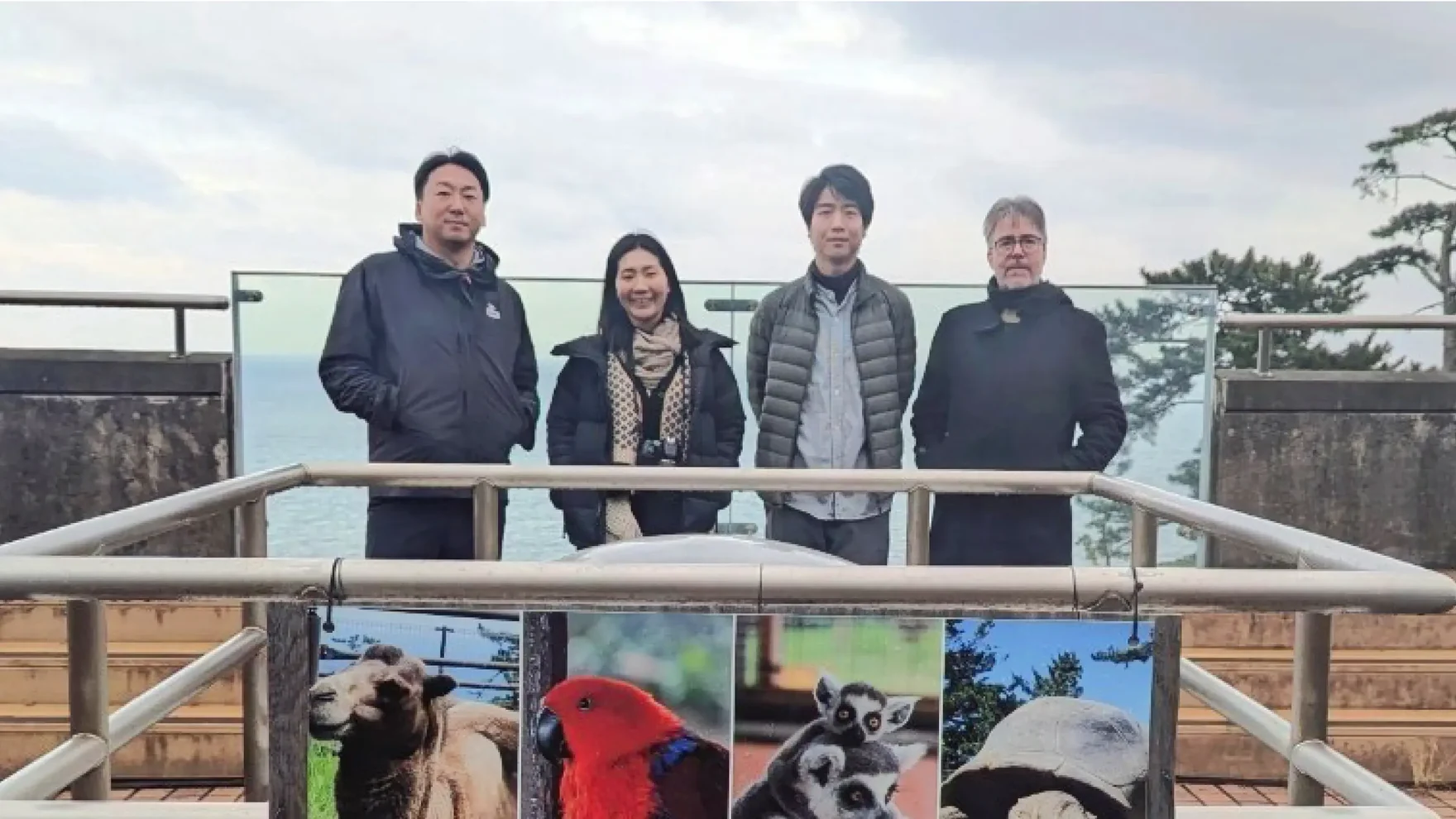
Reaching the people the islands truly speak to
To start, could you tell us what Tokyo Islands is?

Fujico
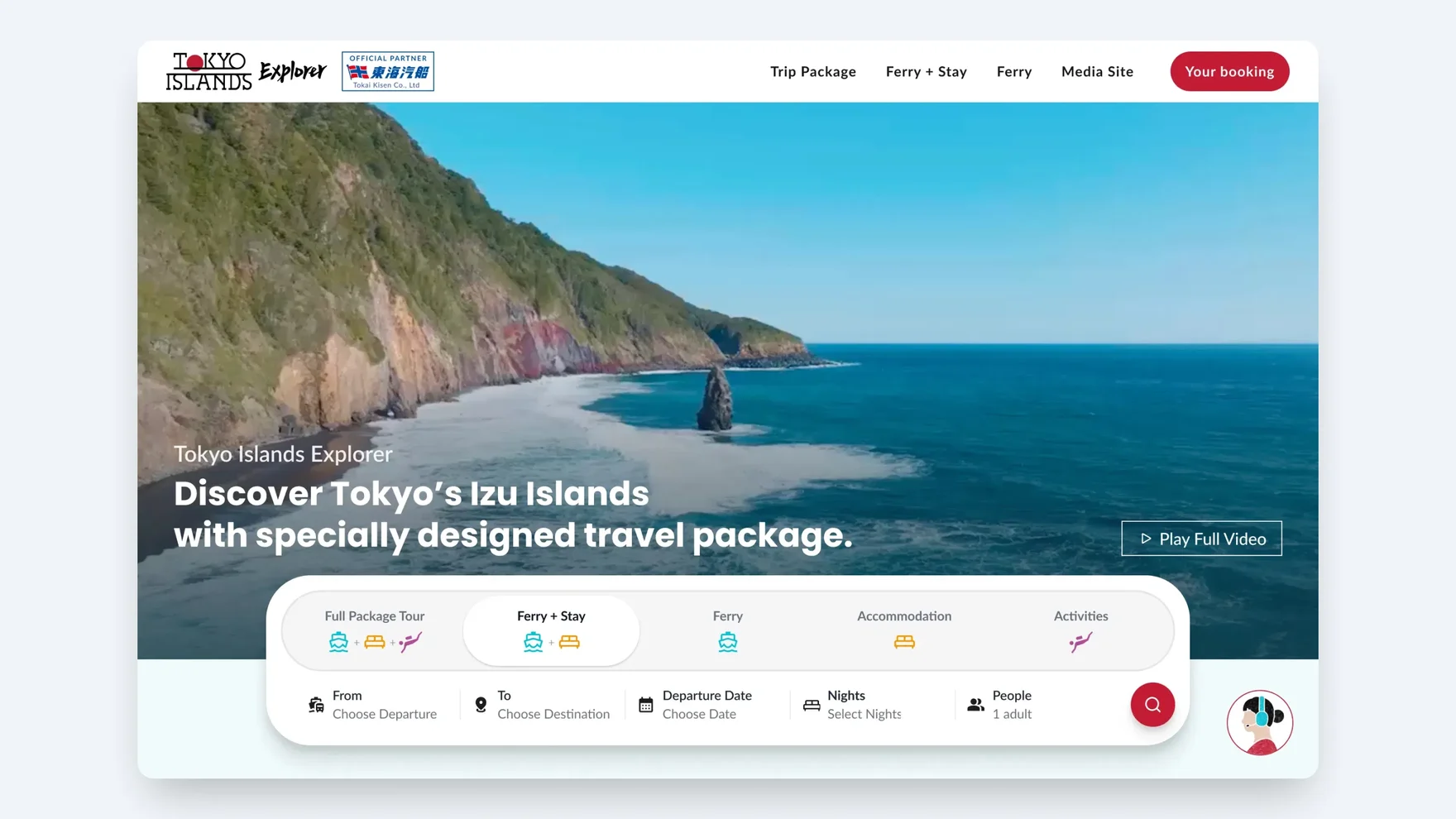
Tokyo Islands runs a travel media site dedicated to the Izu Islands and a booking system for travel packages. We sell packages that combine ferries and accommodation, and even activities, as well as standalone ferry tickets — it's a service that lets you order a trip to the Izu Islands.
I run this project as the project manager, and I also write and edit for the media site. I handle our social media too: Instagram and Facebook are for international visitors, and on X I post in Japanese to stay connected with people on the islands.
You've had a connection with the islands for quite a long time, haven't you?
Fujico
It's been 12 or 13 years now. For better or worse, the Izu Islands don't speak to everyone. But the people they do speak to, they speak to deeply. Rather than trying to bring in everyone who doesn't know about them, I see our mission as growing the number of people who get hooked, like me and Eibu (CEO of Koku Inc.), and reaching those people.

Nakahara
Anyone can write a generic introduction these days — even AI can. But Tokyo Islands has real connections with the islands and a wealth of first-hand information. Above all, Fujico genuinely loves the islands, and that comes across, which is why customers come. I feel that is this business's greatest value and the key to it.
A media site that started on islands with almost no information
How did the business get started?
Fujico
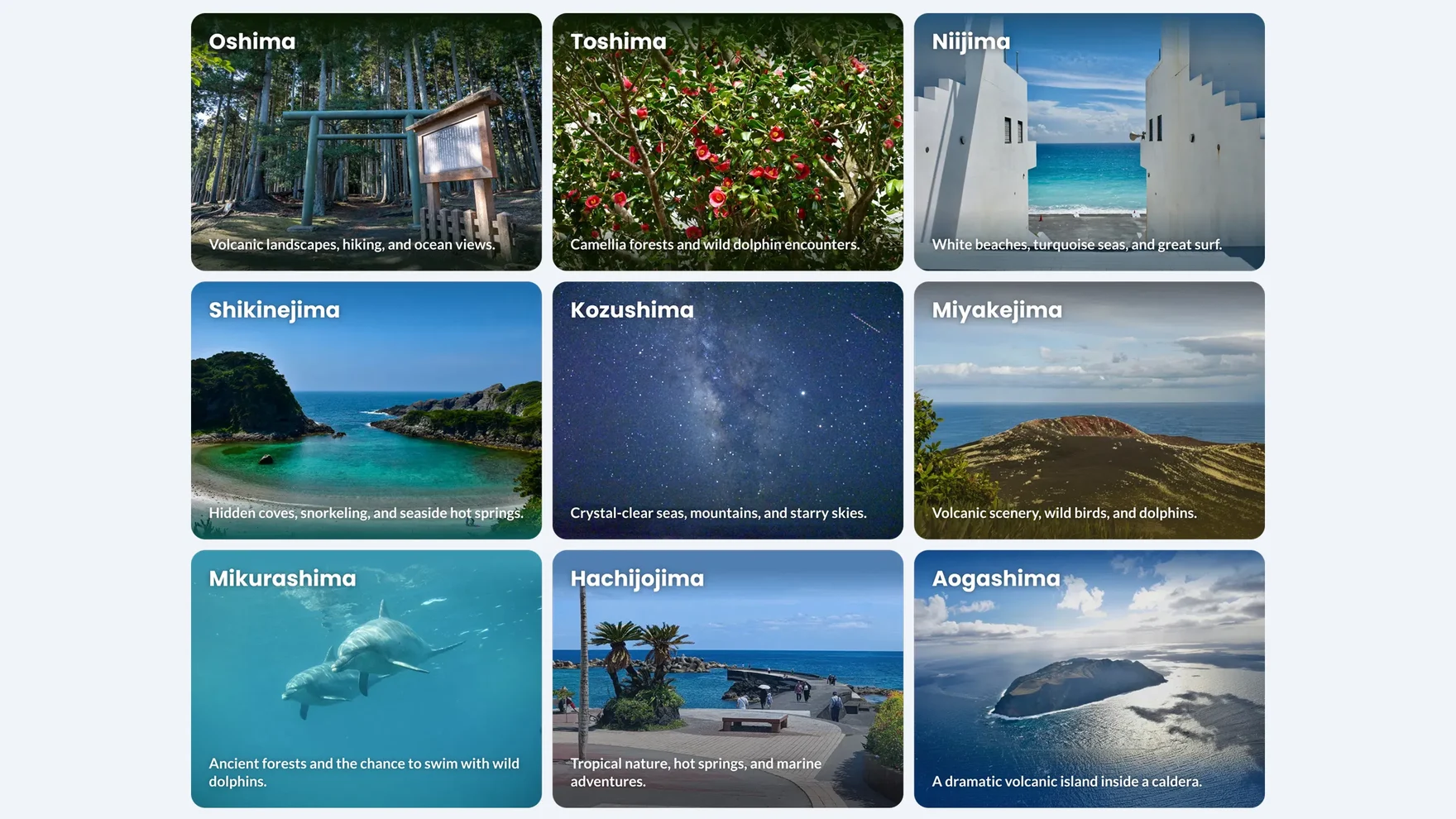
It was originally a service that Eibu and the team launched at a company called Orange. Around 2012 they visited Oshima and thought it was a wonderful place, but there was hardly any information — not even in Japanese, let alone English. So they decided to create a tourism media site, thinking international visitors would probably love the place, and it started as a media site for international visitors.
I joined in 2014. That was right when it was decided to build the official ferry ticket booking system for Tokai Kisen. I was involved from the direction of that project and have also worked on updating articles.
Two renewals that never got finished, and a proposal that "actually looked at the content"
Your relationship with micata began in 2022, when you asked Nakahara, then working independently, to renew tokyoislands.jp. What led to that?
Fujico
The site's design was starting to look a generation behind, so we wanted to renew it. But the two people we asked, one after the other, weren't able to see it through. One was someone we found through acquaintances, but it dragged on and never finished, and in the end we lost contact.
Development is probably far bigger than people imagine. Excitement about something new isn't enough to keep it going. I felt that what really matters is whether the person finds the project genuinely interesting.
Fujico
So we posted the project on a business matching service, and I was really struck that Ryota sent us a proposal that had properly looked at the actual content. That's how we came to talk, and it all started from there.
Nakahara
When I first looked at the media site, the volume of articles and the beauty of the photos told me it was a site made with a lot of passion. I thought I might be able to make it even better. That feeling is what led to where we are today.
"It feels like they're working inside our own company"
That relationship has continued, and micata as a company has worked with you on the ferry booking system and then Explorer. We even went to Oshima together. What is your impression now that we've been working together?
Fujico
Honestly, it's wonderful. Strictly speaking, we're the client asking them to do the work, but we also have chances to share meals together, and it really feels like they're working inside our own company.
Nakahara
That's something we value a lot. I believe whether you can build that kind of relationship directly determines whether a project succeeds. It's because you're a client we can build that with that we've been able to work together for so long, and why we enjoy keeping it going.
Fujico
On top of travel by ship being a somewhat unusual way to travel, small remote islands have many circumstances of their own, and a lot of it is hard to grasp for first-time visitors. They don't just develop with those circumstances in mind — they also think with us about advertising and attracting customers. What makes me happiest is that they take an interest in what kind of business we run and what kind of places these remote islands are, and keep deepening that understanding as they work with us.
Nakahara
What matters most is how to make the business succeed. I see Explorer as a means to that end — development to build a business that lasts. That's exactly why I care a lot about what happens outside the system too, like advertising.
From "just the ferry" to "the whole trip"
With the launch of Explorer, bookings that used to be only ferry tickets expanded to full package tours and bundles with accommodation. What changes have you seen?
Fujico
We used to have the impression that the people coming were seasoned travelers, like backpackers. Now my sense is that more people are coming as families and groups. That's true not only for ferry-and-accommodation packages — even among people booking just ferry tickets, more are coming in groups.
Nakahara
Until now, each booking lived in a different place, and it was hard to get access unless you were a seasoned traveler. Bringing it all together into a package let you reach customers you hadn't reached before, like families.
Has the value per booking changed too?
Fujico
It has gone up a lot. Whether a trip comes together depends on availability of accommodation and ferries, but we sometimes get bookings of around 200,000 to 300,000 yen. Over 100,000 yen for a single party didn't happen very often before, so we're grateful for it.
Becoming a place where people feel safe, whatever happens
What are your plans going forward?
Fujico
Our goal is to be the place where, if you come to us, you can relax about your island trip. Right now, when a ferry is canceled, we're stuck too. Safety standards have become stricter, so cancellations are more frequent than they used to be.
Dealing with a cancellation is tough unless you're a seasoned traveler. So we'd like to team up with partners we could work with, such as hotels near Takeshiba, where the port is, and add follow-up support like "Your ferry was canceled and you lost your room, so we've booked this one for you." You can enjoy an island trip, and even if you can't make it to the islands, you can still enjoy Japan with peace of mind. If we can do that much, I think the value of our being here will grow even more.
Fujico
If all you need is to make a travel booking, there are other options, such as major booking sites. But a trip to the Izu Islands involves a lot that first-time visitors find hard to figure out — how to get around on the islands, where to eat, and accommodation that isn't listed on typical booking sites.
Because we're connected not only with travelers but also with businesses on the islands, we can offer options no one else can. For example, proposing a two-day, one-night itinerary that combines transport, accommodation, and meals. Both in the system and in the service, we want to do more of what only we can do.
For companies that want to give shape to their passion and story
Finally, what kind of company would you recommend micata to?
Fujico
Companies with a story, I'd say. Not just selling something or making something, but having a passion and a story behind it. I think micata is the kind of partner that really takes that in.
I think many companies like that struggle to give it shape. A friend of mine runs a company on their own, and when they hired someone to build their website, what they wanted never took shape. They told me they had thought it was just a matter of having it built, but giving something shape is hard.
Fujico
Of course skill plays a part in turning what you have in mind into reality, but I think it's because they do such thorough hearings. The places we hired before would just say "Right, yes, understood," and never worked through the details.
micata works through the details, and if you say something isn't right, they fix it. That may sound obvious, but I've learned firsthand that it isn't. Engineers really vary from person to person, and it's often hit or miss. For companies that want to give shape to something but are struggling, I think they're a great fit.